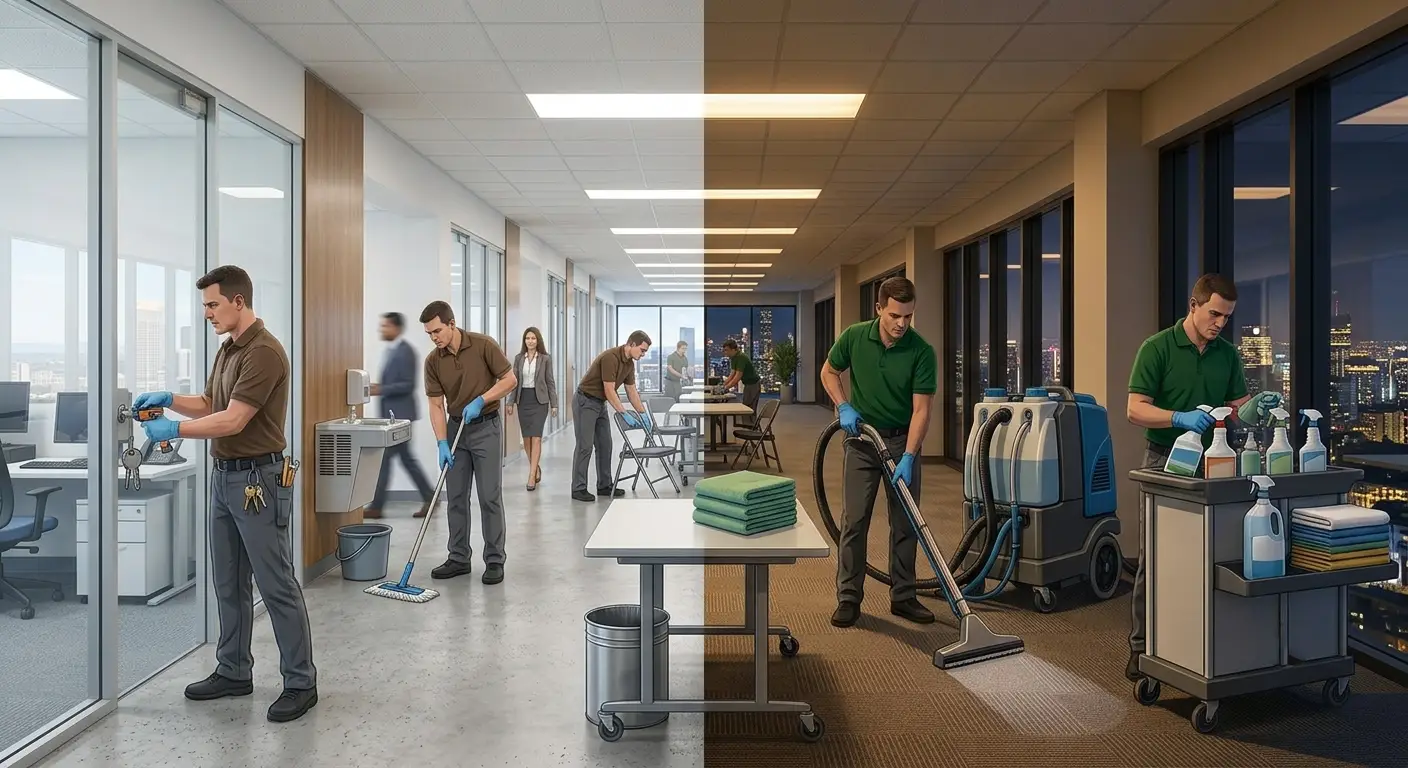
Maintaining a healthy commercial facility requires far more than routine surface tidying. Understanding how to disinfect an office correctly breaks the chain of pathogen transmission, drastically reduces employee absenteeism, and protects your workforce from seasonal viral outbreaks. In high-traffic corporate environments, viruses, bacteria, and fungi quickly settle on shared infrastructure, turning everyday workspaces into hotbeds for cross-contamination.
A simple wipe-down with a damp cloth may remove visible dust, but it leaves invisible microscopic threats intact. To create a truly safe environment for employees, clients, and visitors, business owners and facility managers must implement a methodical, science-backed approach to hygiene. Below, we break down the definitive steps, best practices, and advanced tools necessary to execute an effective commercial disinfection protocol.

1. Step One: Clean Before You Disinfect
A common mistake in commercial maintenance is applying disinfectant directly over visible dirt, dust, and organic matter. Disinfectants cannot destroy viruses or bacteria effectively if shielded by physical barriers like grease layers, soil, or grime. Organic material neutralizes active chemical ingredients, rendering even strong solutions largely ineffective.
First, wipe down surfaces with soap and water or standard cleaning detergents to strip away surface debris. This mechanical cleaning phase physically removes the bulk of germs and clears the path for chemical agents.
Best Practices for the Pre-Cleaning Phase
- Use Microfiber Cloths: Microfiber materials carry a positive charge that attracts negatively charged dust particles and debris, preventing them from being redistributed across surfaces.
- Work from Top to Bottom: Always clean higher surfaces (shelves, monitor tops) before lower ones (desks, chairs) so falling dust is captured in subsequent steps.
- Separate Cleaning Tools by Area: Color-code your microfiber cloths and mops (e.g., red for restrooms, blue for general office spaces) to prevent cross-contamination.
Once the surface is visually clean, dry, and free of biological debris, it is ready for the application of targeted chemical disinfectants.
2. Step Two: Focus on High-Touch Hotspots
Certain office surfaces accumulate significantly higher concentrations of germs due to constant, shared human contact throughout the workday. While cleaning every square inch of an office is important, prioritizing high-touch points ensures maximum protection against rapid viral spread.
Priority zones include:
- Entry & Exit Points: Door handles, push plates, glass entry doors, and elevator buttons.
- Individual & Shared Workstations: Keyboards, computer mice, desk phones, monitor buttons, and touchscreens.
- Communal Kitchens & Breakrooms: Appliance handles (refrigerators, microwaves, coffee makers), faucet taps, water cooler levers, and counter edges.
- Restrooms: Stall latches, flush handles, soap dispenser levers, paper towel dispensers, and sink faucets.
- Conference Rooms: Remote controls, shared marker pens, table surfaces, and chair armrests.
Developing a Routine Schedule
High-touch hotspots require more than a once-a-day cleaning. During peak flu and cold seasons, high-traffic surfaces like breakroom handles and restroom latches should be disinfected multiple times per day to disrupt pathogen transfer between team members.

3. Step Three: Observe Correct Chemical Dwell Times
Simply spraying a surface and immediately wiping it dry does not kill bacteria or viruses. Disinfectants rely on a chemical reaction to penetrate and break down microbial cell walls, a process that takes time. This required duration is known as the chemical’s “wet dwell time” – often ranging anywhere from 3 to 10 minutes depending on the formula.
If a disinfectant dries out or is wiped away before reaching its specified dwell time, the surface remains contaminated, leading to a false sense of security.

Key Steps to Ensure Effective Chemical Application
- Read the Label Instructions: Check manufacturer directions for specific dwell time, dilution ratios, and safety recommendations.
- Keep Surfaces Visibly Wet: Reapply the solution if it evaporates prior to reaching the required contact time.
- Select the Right Product: Always verify dwell time specifications and microbial targets using products listed on the official EPA List N database for antimicrobial efficacy against viral pathogens.
- Use Proper Personal Protective Equipment (PPE): Ensure staff wear appropriate gloves, eye protection, or masks when handling concentrated chemicals to maintain personal safety.
4. Step Four: Utilize Electrostatic Technology
For large commercial facilities, open-plan offices, or outbreak remediation, manual wiping alone can be slow and may miss intricate, hard-to-reach crevices. Modern facilities rely on specialized technology to ensure comprehensive, facility-wide coverage.
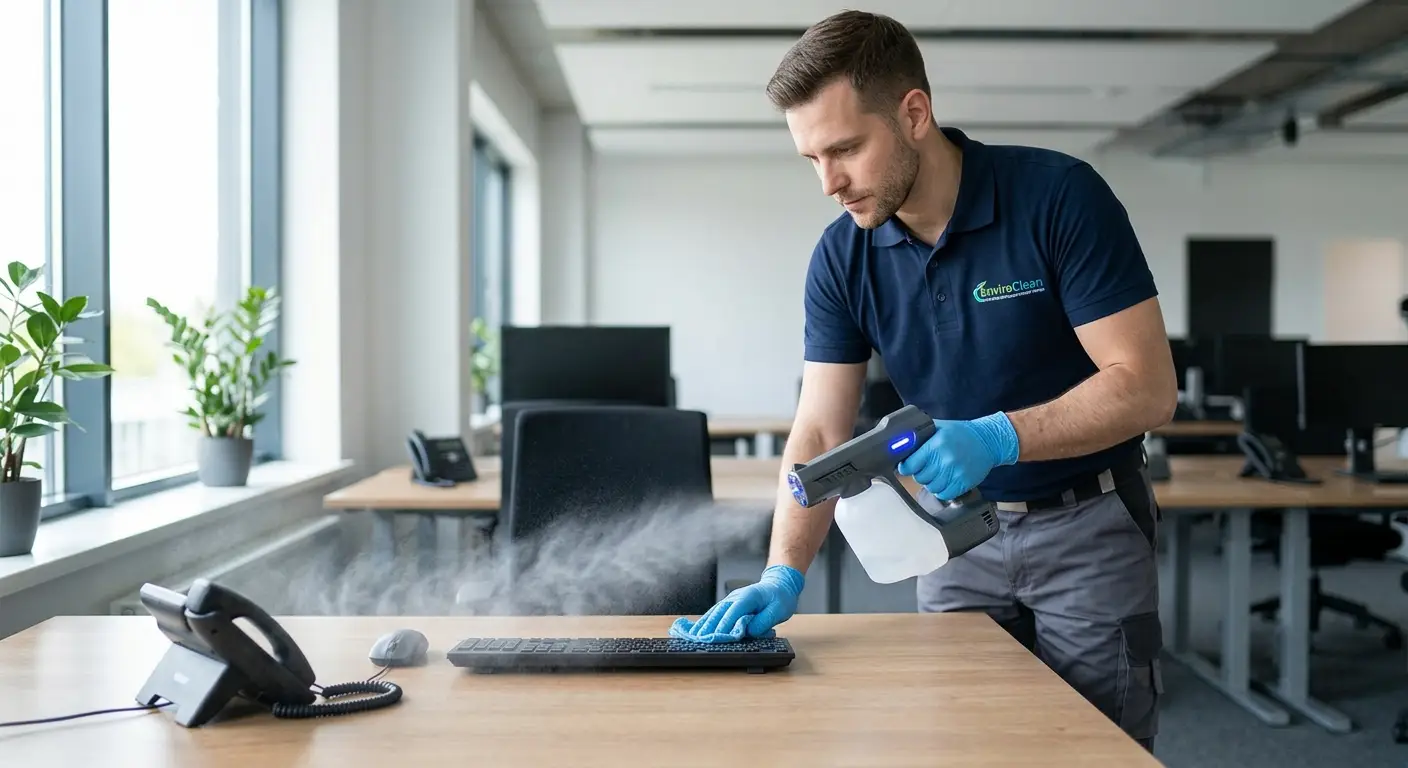
Electrostatic sprayers apply a positive electrical charge to disinfectant droplets as they exit the nozzle. Because targeted surfaces are naturally negative or neutral, the charged droplets are magnetically attracted to all exposed areas. This creates a 360-degree “wrap-around” effect, allowing the solution to coat the undersides, backs, and hidden corners of office furniture and equipment effortlessly.
Benefits of Electrostatic Disinfection
- Complete Coverage: Reaches hidden surfaces, chair undersides, and keyboard keys that traditional wiping frequently skips.
- Efficiency: Disinfects vast square footage in a fraction of the time required for manual cleaning.
- Uniform Application: Delivers an even light mist, ensuring proper wet dwell time without oversaturating electronic equipment.
Protect Your Workplace with Professional Solutions
Maintaining hospital-grade disinfection internally can strain staff resources, divert attention from core business goals, and lead to inconsistent execution. Partnering with a professional commercial cleaning service ensures your workplace receives rigorous, science-backed sanitation on a consistent schedule.
Learn how our advanced hospital-grade disinfection services and complete office cleaning services shield your workspace from viral outbreaks.
Schedule Professional Office Disinfection
Ensure your workplace meets strict health guidelines with advanced electrostatic spraying.